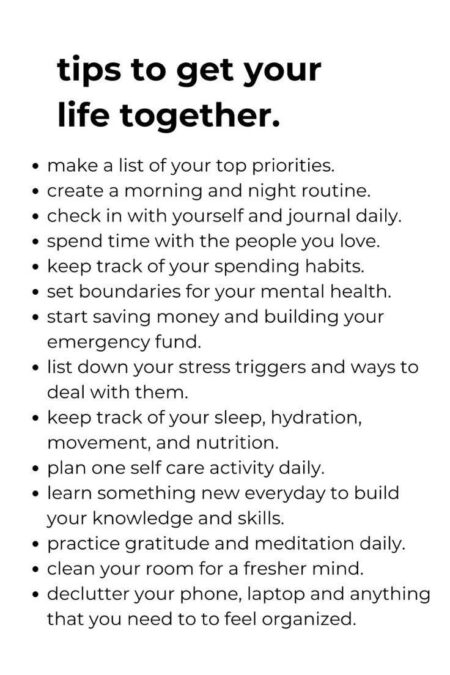
Feeling scattered or overwhelmed is a common experience, but reclaiming control starts with small, intentional steps. Here’s a comprehensive dive into a set of practical tips designed to organize your thoughts, habits, and environment, paving the way for a more balanced existence.
Begin with “Make a list of your top priorities.” This isn’t just about jotting down tasks; it’s about clarifying what truly matters. Categorize them into personal, professional, and relational goals. For example, if family time ranks high, block it out before work demands creep in. Reviewing this list weekly ensures alignment and prevents drift.
Next, “Create a morning and night routine.” Mornings might include hydration, light exercise, and planning the day, while evenings focus on winding down with reading or reflection. Consistency here builds momentum, turning chaos into structure.
“Check in with yourself and journal daily” fosters self-awareness. Dedicate time to note achievements, setbacks, and emotions. This practice uncovers patterns, like recurring stressors, and promotes emotional intelligence.
“Spend time with the people you love” reminds us that relationships are foundational. Schedule regular interactions, whether shared meals or walks, to nurture bonds that provide support and joy.
“Keep track of your spending habits” is crucial for financial health. Use apps or spreadsheets to monitor expenses, identifying leaks like impulse buys. This ties into “Start saving money and building your emergency fund,” aiming for three to six months’ worth of essentials. Automate transfers to make it effortless.
“Set boundaries for your mental health” means learning to say no without guilt. Protect energy by limiting exposure to draining situations or people.
“List down your stress triggers and ways to deal with them” involves honest inventory. If deadlines cause anxiety, countermeasures like breaking tasks into steps can mitigate it.
“Keep track of your sleep, hydration, movement, and nutrition” forms the core of physical well-being. Aim for seven to nine hours of rest, adequate water intake, daily activity, and balanced meals. Tracking via journals or apps reveals correlations between these and mood.
“Plan one self-care activity daily” could be as simple as a bath or hobby time, ensuring recharge amid busyness.
“Learn something new every day to build your knowledge and skills” keeps the mind sharp. Read articles, watch tutorials, or practice languages—cumulative growth compounds.
“Practice gratitude and meditation daily” shifts focus to positives. Gratitude lists and short meditations reduce negativity bias.
“Clean your room for a fresher mind” leverages the psychology of tidy spaces equaling clear thoughts. Regular decluttering prevents overwhelm.
“Declutter your phone, laptop, and anything that you need to feel organized” streamlines digital life. Delete unused apps, organize files, and curate notifications for focus.
Implementing these tips requires patience; start with a few and build. The result? A life where productivity and peace coexist, empowering you to thrive rather than just survive.