One difficult conversation can leave an echo long after it’s over. You replay it while making dinner, carry it into bedtime and wake up still arguing with it. This shared quote offers a reminder: a rough moment doesn’t have to become the whole story of your week.
Disclaimer: This article is for general educational purposes only and is not medical or mental-health advice. If you are struggling, please reach out to your doctor or a licensed mental-health professional. If you are in crisis or thinking about harming yourself, call or text 988 to reach the 988 Suicide & Crisis Lifeline (US), or call 911 in an emergency.
The Bouncing-Back Reminder
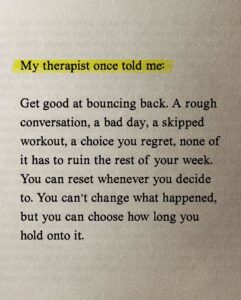
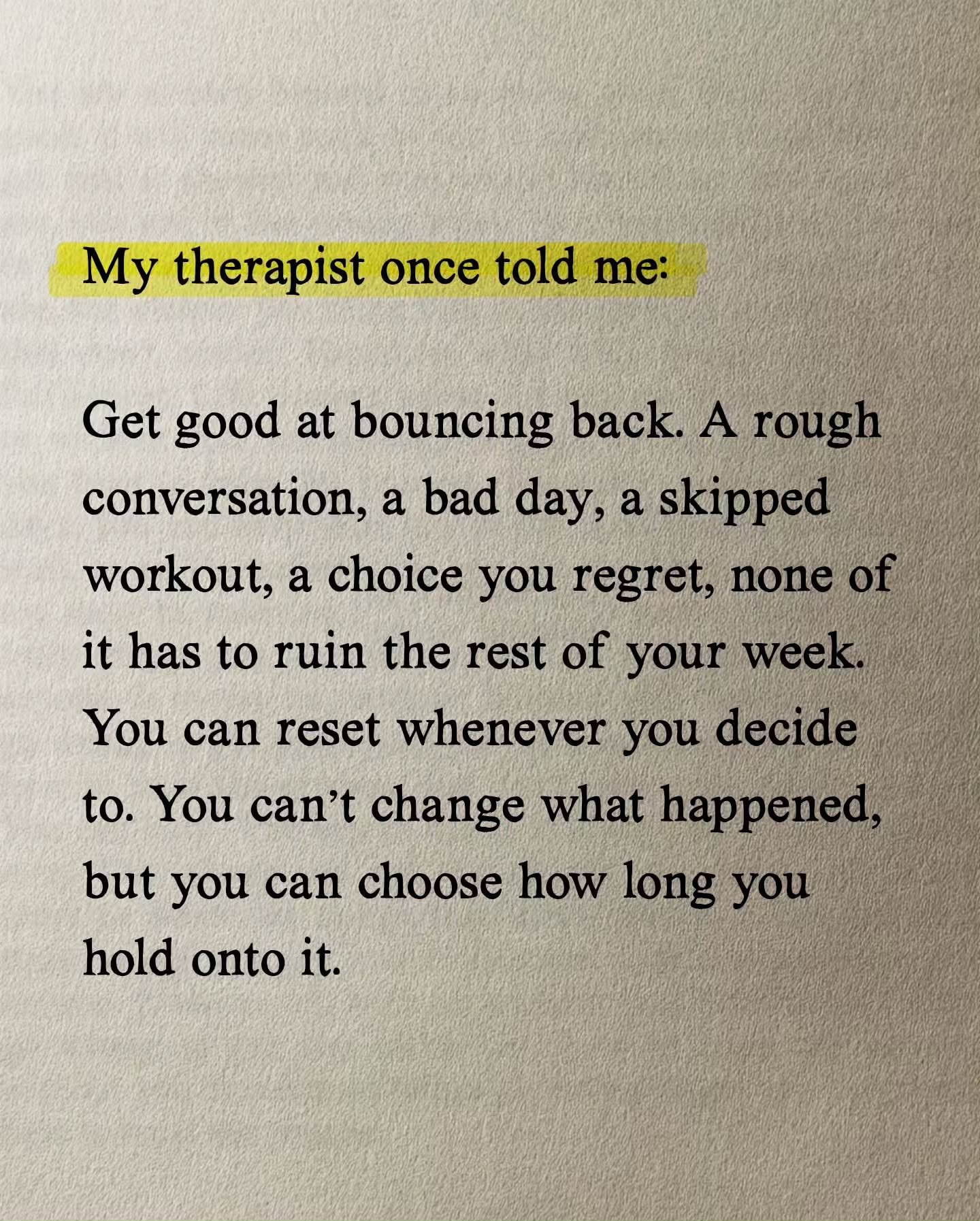
The image begins, “My therapist once told me:” and continues:
“Get good at bouncing back. A rough conversation, a bad day, a skipped workout, a choice you regret, none of it has to ruin the rest of your week. You can reset whenever you decide to. You can’t change what happened, but you can choose how long you hold onto it.”
No author or therapist is identified. The first-person line belongs to the image; it isn’t a claim about my own therapy experience.
A Reset Is Not an Order to Get Over It
The last sentence can feel empowering after an everyday setback. It can also sound too simple when you’re dealing with grief, trauma or ongoing distress. Emotions don’t always leave just because we decide they should. Needing time or professional support isn’t a failure to bounce back.
For an ordinary regret, though, we can sometimes stop adding punishment to the problem. Missing a workout doesn’t require abandoning the week. Speaking sharply doesn’t mean you’re incapable of becoming more thoughtful. A mistake calls for a response, not a permanent identity.
Separate Repair From Replay
Try dividing a page into two columns: “What needs repair?” and “What am I replaying?”
- Repair might mean offering an apology, rescheduling something you missed or correcting a practical mistake.
- Replay might mean imagining twenty versions of a conversation without learning anything new.
- Some situations need both time and help. You don’t have to sort everything out alone.
Do the available repair. Then give yourself permission to return to something ordinary: a meal, a shower, a small task, a conversation that isn’t about the setback.
Choose the Next Chapter, Not a Deadline for Feeling Better
Instead of “I should be over this,” try “What would help me take care of the next hour?” That question leaves room for your feelings while giving your attention somewhere useful to go.
Bouncing back isn’t always quick. Sometimes it looks like asking for company. Sometimes it means resting before trying again. The skill is returning with care, not winning a race against your own emotions.
Related reading: Rising after you fall what resilience really looks like and Honest with yourself.