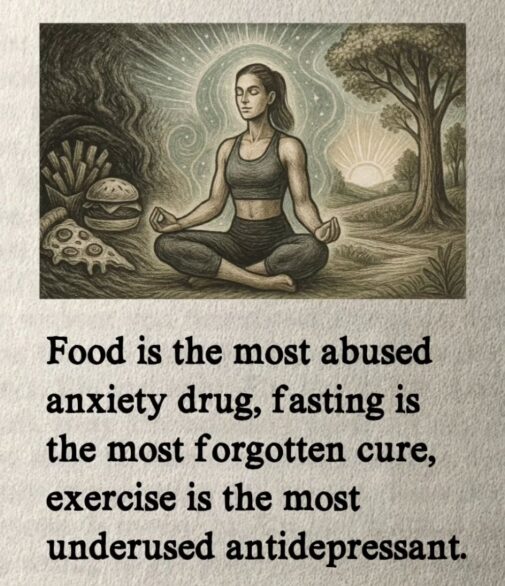
The evocative illustration of a person meditating amidst junk food temptations captures a profound truth about modern wellness and its impact on our mental state. The quote highlights how food often serves as a crutch for anxiety, providing temporary comfort through emotional eating but perpetuating cycles of emotional distress and dependency. In contrast, fasting is portrayed as an overlooked remedy, allowing the body to reset and heal internally by promoting cellular repair and mental clarity. Exercise, depicted through the serene, active posture of the meditator, is emphasized as a natural mood booster that’s frequently neglected in favor of pharmaceutical solutions, offering sustainable benefits without the risks of addiction or side effects. This holistic view challenges us to reconsider our daily habits, viewing them not just as physical necessities but as powerful tools for emotional regulation and psychological well-being.
This message encourages a shift toward holistic health practices that address the root causes of mental health issues rather than masking symptoms. Overeating processed foods can spike blood sugar levels, leading to mood swings and heightened anxiety, while intermittent fasting promotes autophagy—a process where the body cleans out damaged cells—reducing inflammation, improving focus, and even enhancing cognitive function over time. Regular physical activity, such as yoga, running, or strength training, releases endorphins and other neurotransmitters like serotonin, acting as a powerful antidepressant without the common drawbacks of medication, such as drowsiness or dependency. The artwork’s blend of temptation and tranquility reminds us that true well-being comes from mindful choices, not quick fixes, fostering a balanced approach to mental health that integrates nutrition, rest, and movement into a comprehensive lifestyle strategy.
Embrace this wisdom by starting small: try a short fast, like skipping a meal or practicing time-restricted eating, or incorporate a daily walk to experience the benefits firsthand. Integrating these habits can transform your relationship with food and movement, leading to greater emotional resilience and a more stable mood. Reflect on your routines, perhaps journaling about how certain foods affect your anxiety or how exercise lifts your spirits, and prioritize these natural tools for a healthier, happier life. Over time, this mindful integration can lead to lasting changes, empowering you to manage mental health proactively and naturally.