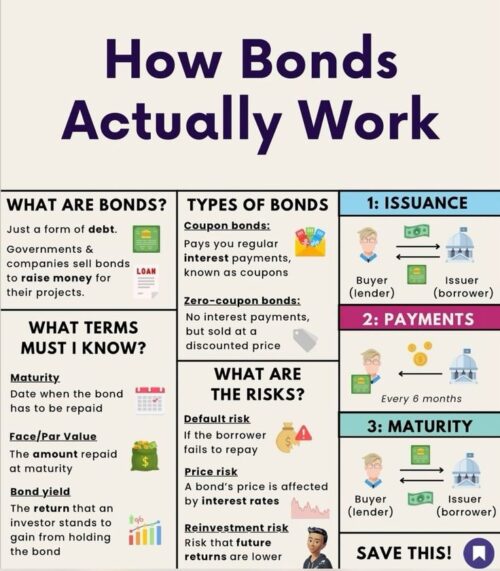
Bonds are a cornerstone of the financial world, yet many people overlook their mechanics and potential. At their core, bonds represent a form of debt where governments and companies sell them to raise money for projects, essentially borrowing from investors like you. Understanding how they function can empower you to make smarter investment choices and diversify your portfolio beyond stocks.
Let’s break it down step by step. First, consider the types of bonds: coupon bonds pay regular interest payments, known as coupons, providing a steady income stream. Zero-coupon bonds, on the other hand, offer no interest along the way but are sold at a discounted price, with the profit coming at maturity when you receive the full face value. Key terms include maturity—the date when the bond must be repaid—face or par value, which is the amount returned at the end, and bond yield, representing the return an investor stands to gain from holding it.
The process unfolds in three main stages: issuance, where the borrower (issuer) sells the bond to the lender (buyer); payments, often every six months for coupon bonds; and maturity, where the principal is returned. However, bonds aren’t without risks. Default risk arises if the borrower fails to repay, price risk occurs when interest rates affect the bond’s market value, and reinvestment risk involves the possibility that future returns might be lower when reinvesting payments.
Incorporating bonds into your strategy can provide stability, especially in volatile markets. They often act as a counterbalance to stocks, offering predictable income and lower risk. Whether you’re a beginner or seasoned investor, grasping these fundamentals opens doors to more informed decisions. Explore bonds through reputable sources or consult a financial advisor to see how they fit your goals.