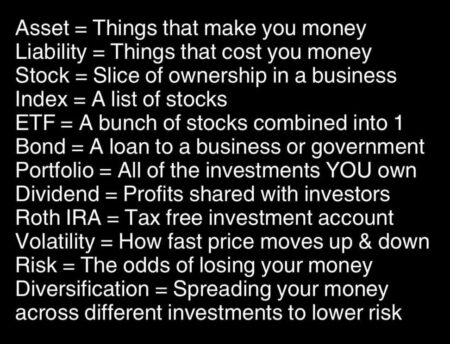
Investing can seem like a complex world filled with jargon, but breaking it down into simple concepts makes it accessible for anyone looking to build wealth. At its core, smart investing revolves around understanding what puts money in your pocket versus what takes it out, and how to balance growth with security. Let’s dive into these fundamental terms and explore how they fit into a solid financial strategy.
Assets vs. Liabilities: The Foundation of Wealth Building
Assets are the engines of your financial growth—they’re the things that generate income over time. Think real estate rentals, dividend-paying stocks, or even a side business. On the flip side, liabilities drain your resources, like car loans or credit card debt that accrue interest without providing returns. The key to financial freedom? Maximize assets while minimizing liabilities. By shifting focus toward income-producing items, you create a snowball effect where your money works for you, not against you.
Stocks, Indexes, and ETFs: Owning Pieces of the Market
A stock represents a slice of ownership in a business, giving you a claim on its profits and growth. When the company thrives, so does your investment through price appreciation or dividends—profits shared directly with investors. But picking individual stocks can be risky, which is where indexes come in: they’re essentially lists of stocks, like the S&P 500, tracking overall market performance.
For broader exposure, ETFs (Exchange-Traded Funds) bundle a bunch of stocks into one easy-to-buy unit. This allows you to invest in entire sectors or markets without the hassle of selecting winners and losers. They’re popular for their low costs and liquidity, making them ideal for beginners aiming to ride market waves without deep analysis.
Bonds and Portfolios: Balancing Stability and Growth
Bonds act as loans to businesses or governments, offering steady interest payments in return. They’re generally safer than stocks, providing a cushion during market dips, but with lower potential returns. Your portfolio encompasses all your investments—stocks, bonds, ETFs, and more. A well-rounded portfolio spreads risk through diversification, meaning you allocate funds across various assets to avoid putting all eggs in one basket. This strategy lowers the odds of major losses, as not everything moves in tandem.
Roth IRAs, Volatility, and Risk Management
A Roth IRA stands out as a tax-free investment account, where contributions grow without tax hits on withdrawals in retirement. It’s a powerful tool for long-term planning, especially when paired with diversified holdings.
Volatility measures how quickly prices swing up and down—high volatility means bigger potential gains but also steeper drops. Risk, meanwhile, is the probability of losing capital. While no investment is risk-free, understanding these helps you choose based on your tolerance: conservative folks might lean toward bonds, while aggressive investors chase volatile stocks for higher rewards.
By grasping these concepts, you empower yourself to make informed decisions. Start small, perhaps with an ETF in a Roth IRA, and watch your knowledge compound into real wealth. Remember, the best investors focus on education first—your future self will thank you.