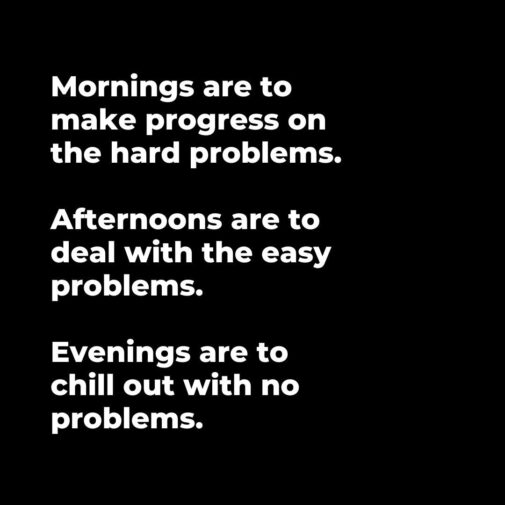
IImagine starting your day with the toughest challenges, when your mind is fresh and focused. As author Mark Manson wisely puts it, “Mornings are to make progress on the hard problems. Afternoons are to deal with the easy problems. Evenings are to chill out with no problems.” This approach isn’t just about time management; it’s about aligning your energy with your tasks to create a balanced, fulfilling routine.
In the morning, tackle those complex projects that require deep concentration—whether it’s strategizing for a big goal or solving a persistent issue. Your cognitive resources are at their peak after a good night’s rest, making it the ideal time for breakthroughs. As the day progresses into the afternoon, shift to lighter duties like responding to emails or routine administrative work. This keeps momentum going without draining your reserves.
By evening, prioritize rest and recharge. Disconnect from work, enjoy hobbies, or spend time with loved ones. This structure prevents burnout and fosters long-term success. Implementing it starts with planning: list your hard problems the night before, and commit to protecting your evenings. Over time, this rhythm can transform how you approach life, leading to greater efficiency and well-being.
Consider how this method adapts to different lifestyles. For creative professionals, mornings might mean brainstorming innovative ideas, while afternoons handle edits and feedback. Parents could use early hours for personal goals before family demands peak. Experiment with adjustments, like incorporating short breaks, to find what suits you best. The key is consistency, turning this into a habit that enhances overall life satisfaction.